Cutting costs usually comes with tough decisions.
Smaller teams. Tighter budgets. Slower output.
Most leaders have been there. You want to reduce expenses, but you don’t want to lose momentum or overburden your team.
That’s the tension.
Agentic AI offers a different way to approach it.
Instead of removing people, it removes the extra work that slows them down.
Let’s break down how that actually plays out.
Cost reduction doesn’t have to mean layoffs
When people hear “automation,” they often assume job cuts.
But that’s not the only path.
A lot of business costs come from:
- Repetitive tasks
- Delays in execution
- Manual coordination
- Missed follow-ups
These things don’t just take time. They create hidden costs.
Agentic AI targets these areas directly.
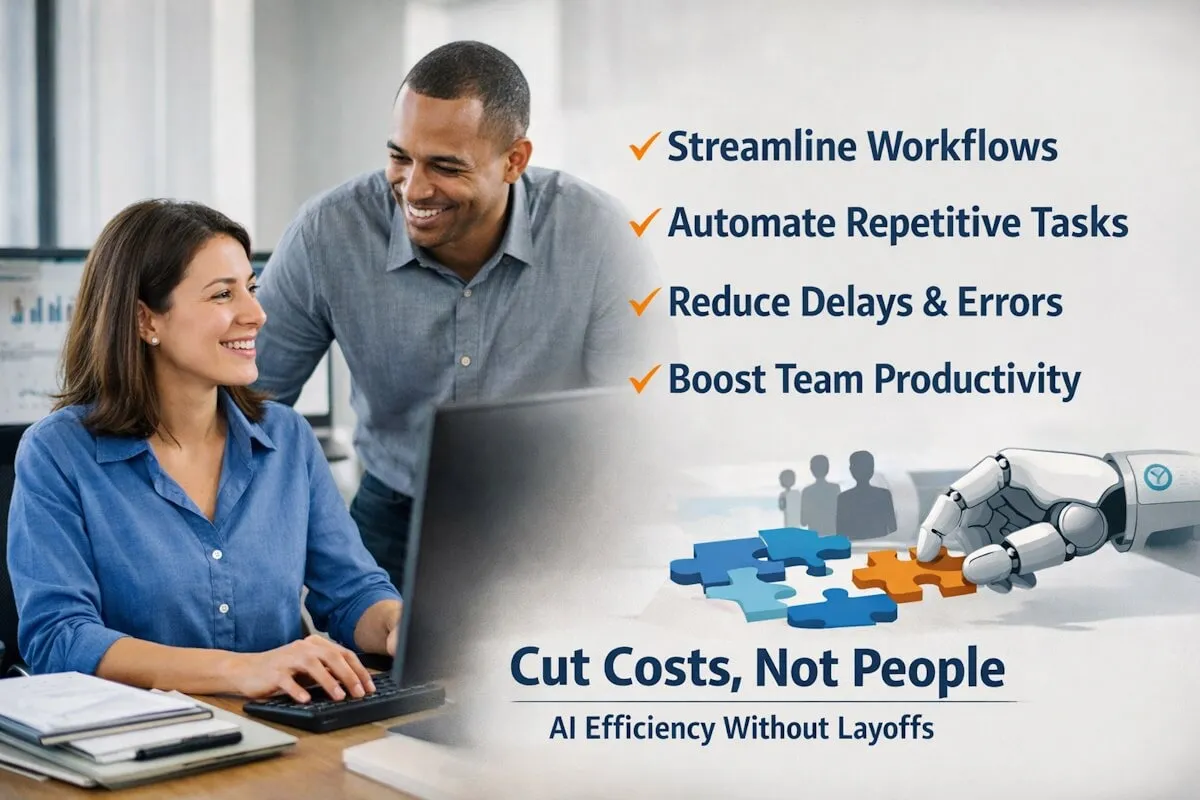
It reduces the workload without reducing the workforce.
Doing more with the same team
Here’s where the shift happens.
Instead of asking, “How do we cut headcount?”
You start asking, “How much more can our current team handle?”
Agentic systems help by:
- Taking over routine execution
- Handling background tasks
- Keeping workflows moving
Your team still leads. But they’re not stuck in every step.
This increases output without increasing payroll.
Eliminating repetitive work
Think about how much time goes into small, repeated actions.
- Updating records
- Sending follow-ups
- Checking statuses
- Assigning tasks
Individually, they seem small.
Together, they take up a huge chunk of time.
Agentic AI handles these automatically.
That frees up hours across your team.
And those hours translate into cost savings.
Reducing delays between tasks
Delays are expensive, even if they’re not obvious.
A task gets completed, but the next step waits.
Someone needs to review it. Someone needs to approve it. Someone needs to act on it.
These gaps slow everything down.
Agentic systems reduce these delays.
They:
- Trigger the next action instantly
- Keep workflows moving
- Avoid unnecessary waiting time
Faster execution means better use of resources.
Lowering the need for constant supervision
Managing workflows takes effort.
Checking progress. Following up. Making sure things are moving.
That’s a hidden cost.
Agentic AI reduces this need.
It:
- Tracks progress automatically
- Flags issues when needed
- Handles routine decisions
Managers spend less time monitoring and more time improving processes.
Minimizing errors and rework
Mistakes cost money.
Incorrect data. Missed steps. Poor coordination.
They lead to:
- Rework
- Delays
- Customer dissatisfaction
Agentic systems follow structured logic.
That reduces:
- Human error
- Process inconsistencies
- Miscommunication
Fewer mistakes mean fewer resources spent fixing them.
Avoiding unnecessary hiring
As businesses grow, workload increases.
The usual response is to hire more people.
But what if your existing team could handle that growth?
Agentic AI makes that possible.
By automating execution, you:
- Extend the capacity of your current team
- Delay or reduce hiring needs
- Keep operational costs under control
Growth without proportional cost increase.
Improving customer handling without expanding support teams
Customer support is a major cost center.
As volume increases, so does the need for more agents.
Agentic systems help by:
- Handling common issues end-to-end
- Managing requests without escalation
- Responding instantly
Your support team focuses on complex cases.
You don’t need to scale the team as quickly.
Why this approach feels different
Traditional cost-cutting feels restrictive.
You remove resources and try to maintain output.
Agentic AI flips that.
You maintain resources and improve output.
That’s a more sustainable approach.
And it keeps your team motivated instead of stretched thin.
Where businesses often get it wrong
Some companies try to apply agentic AI without clear direction.
They:
- Automate random tasks
- Skip workflow design
- Expect instant results
That leads to poor outcomes.
Cost reduction doesn’t come from random automation.
It comes from structured execution.
Why working with the right team matters
Designing these systems properly is key.
That’s why businesses explore Agentic AI Development Services to build solutions that actually fit their workflows.
A well-designed system:
- Reduces unnecessary steps
- Improves execution flow
- Delivers consistent results
That directly impacts costs.
The value of skilled developers
Behind every effective system is thoughtful design.
When you Hire AI Agent Developers, you’re bringing in people who understand:
- How to structure workflows
- How to define decision paths
- How to ensure reliable execution
This is what turns automation into real cost savings.
Where you’ll see the biggest impact first
If you’re looking for quick wins, start with:
- Sales follow-ups
- Customer support processes
- Internal task management
- Data entry and reporting
These areas often show results early.
How to get started without overcomplicating it
You don’t need to change everything at once.
Start by asking:
- Where is most of our time going?
- Which tasks are repetitive?
- Where do delays happen often?
Pick one area.
Test it.
Measure the impact.
Then expand.
The long-term impact on your business
Over time, this approach changes how your business operates.
You’ll notice:
- More work getting done without extra effort
- Fewer bottlenecks
- Better use of your team’s time
And most importantly, lower operational costs without cutting people.
A shift in how you think about costs
Cost reduction is no longer just about cutting.
It’s about working smarter.
Removing inefficiencies. Improving flow. Increasing output.
Agentic AI makes that possible.
So, what’s your next move?
You can keep trying to reduce costs by tightening budgets and limiting resources.
Or you can start improving how work gets done.
Because in the end, the most effective way to reduce costs is not by doing less.
It’s by getting more done with what you already have.